I rise this morning with the quiet joy that this day holds, a holy day, a luminous remembrance of all the saints who have gone before us, those who lived, breathed, and died in faith. Their lives, like ancient constellations, still shine through history, revealing for us the glory of the living God.
When I was a child, All Saints’ Day was one of those rare mornings when we dressed in costumes and faith itself. We would put on robes, wings, crowns, and halos to participate. Each child chose a saint whose life somehow mirrored a secret longing within. I remember mine vividly. In those simple imitations, we reached toward heaven’s company, joining in that invisible communion that binds earth and eternity.
I see the same thing now in classrooms where children still dress as saints. And while the world around us buzzes with the noise of Halloween, a cultural spectacle of masks, commerce, and creative chaos, I find myself unmoved by its glitter. I respect the joy it brings others, but my heart belongs elsewhere: to the quiet celebration of sanctity, not spook; of light, not illusion. There are moments in culture we simply let pass, not out of disdain but discernment.
The Universal Language of Remembrance
All Saints’ Day, in its quiet wisdom, reaches beyond Catholic devotion. It echoes the human instinct found in many cultures, the desire to honor the luminous dead, those whose lives still water the roots of our collective soul.
In my Igbo heritage of southeastern Nigeria, we speak of ndi nna anyi ukwu or ndi okpu na ndi egede—“our great ancestors”—whose virtues and examples still bless the living. The New Yam festivals often begin with libations poured on the earth, not as worship but as remembrance: “May the path of the fathers guide the steps of the sons.” Among the Japanese, the Obon Festival lights lanterns to guide ancestral spirits home; in Mexico, the Día de los Muertos fills altars with marigolds and memory, music and prayer. Across the Indian subcontinent, during Pitru Paksha, families honor forebears through ritual offerings, believing that gratitude to the ancestors ensures peace in the family line.
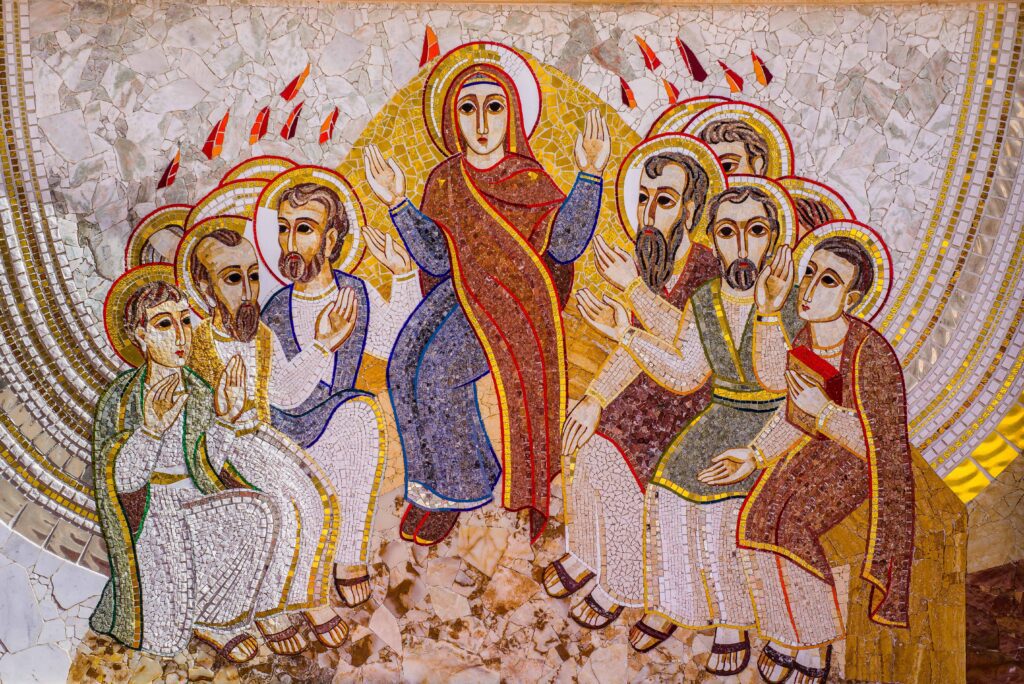
From the Andes to the Arctic, from the Maasai plains to the Celtic highlands, there runs a sacred thread, humanity’s unbroken yearning to keep company with the noble departed. Each people, in their way, echoes the same truth: we are because they were.
Memory as Divine Inheritance
These cultural rituals, ancient and diverse, reveal something deeply human, the divine memory etched into our collective consciousness. God, in his wisdom, planted in every people the longing to remember, to celebrate, and to imitate those who modeled the good and the beautiful. Without such memory, civilization collapses into amnesia. Imagine a world without reference points; no Archimedes in mathematics, no Hypatia in philosophy, no Augustine or Aquinas in theology, no Curie in science, no Teresa in compassion, no Francis in simplicity. Lose them, and we lose our compass.
The saints are those compass stars, the holiest evidence of human remembrance. They orient the moral and spiritual imagination of humanity toward God. They are our living theology, the Word made flesh again through love, witness, and perseverance. And when we forget them, we lose sight of what we hope to become.
So, what do I do on this day of holy memory and the month of November? I light my heart with praise of God for their lives. I chant their names in gratitude. And as I do, I remember those closer to home: my grandmother, who prayed in the early dawn; my father and mother, whose silence taught me fortitude; my mentors and relatives, whose faith steadied mine. They may never be canonized, but heaven knows their sanctity. The Lord knows their names.
The Sacred Work of Remembering
The Church, in her wisdom, gifts us the month of November as a sacred mirror, to remember, grieve, celebrate, and bring closure. In remembering, we do not resurrect the past; we sanctify it. We allow memory to become grace.
When we remember, we invite healing. We let gratitude speak louder than grief, and faith steadier than fear. Every prayer for the dead, every recited name in the litany of love, becomes a bridge between now and eternity, time and timelessness. I’m blessed to have cheerleaders in that eternity of blessing.
May the saints, known and unknown, canonized and ancestral, continue to inspire our daily striving. May their stories root our faith in courage and compassion. And may our remembrance draw us, quietly and humbly, toward that communion of the remembered, where love never dies, only deepens.
Amen.
[Readings: Revelation 7:2-4, 9-14; 1 John 3:1-3; Matthew 5:1-12a]
Related Articles
- All Saints: The Communion of Saints
- Saints Today
- What does it mean to be Holy?
- Go Forth
- Let it Shine
- Healing the Wounded World
- Call To Faith and Courage
- Gift of Light and Joy
Key Takeaways
- All Saints’ Day celebrates the lives of saints and reminds us of our connection with the departed.
- Cultural rituals across the world express a shared human desire to honor ancestors, highlighting the universal language of remembrance.
- Memory serves as a divine inheritance, guiding our moral and spiritual understanding through the examples set by saints.
- Remembering the deceased invites healing and transforms grief into gratitude, marking November as a sacred time for prayerful reflection on the communion of saints.
- We draw inspiration from canonized saints and role-modeling legacies as their stories deepen our faith and compassion.